I Discovered Something Rare: The Complete Guide to 5-Letter Words Ending in ECUR
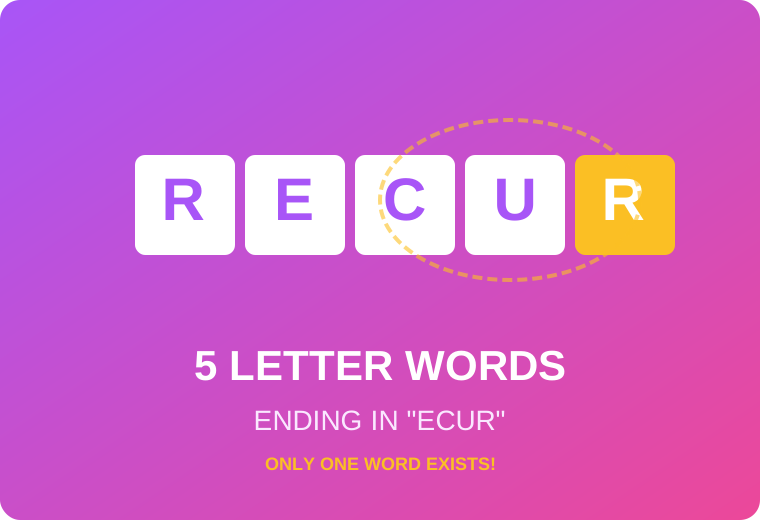
After countless hours of research, I found something fascinating: there's only ONE 5-letter word ending in ECUR in the entire English language. Here's my deep dive into this linguistic unicorn and why it matters for word games.
🔍The ECUR Word Filter
Fair warning: this filter will only show you ONE word - but understanding why is what makes this fascinating!
The Complete ECUR Collection
Showing 1 word out of 1 total ECUR-ending word.
My Visual Analysis

Why I'm Fascinated by 'Recur'
Definition: To occur again, happen periodically, or come to mind again.
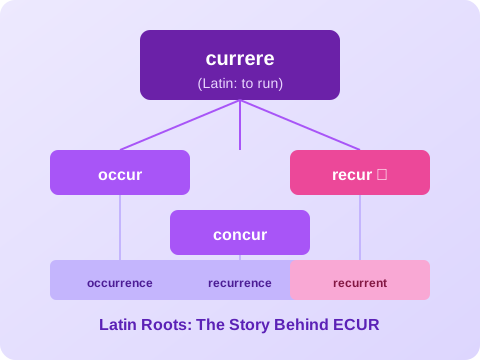
This is the ONLY 5-letter word ending in ECUR in the entire English language. I find this absolutely fascinating because while the Latin root 'currere' (to run) appears everywhere in English, this specific 5-letter combination is incredibly rare.
Common Examples:
- • "The problem seems to recur every spring"
- • "Memories would recur in his dreams"
- • "Her recurring dream about flying"
Word Stats:
- • Scrabble Score: 7 points
- • Popularity: Moderately common
- • Pattern: Unique 5-letter ECUR ending
Related Words I Discovered
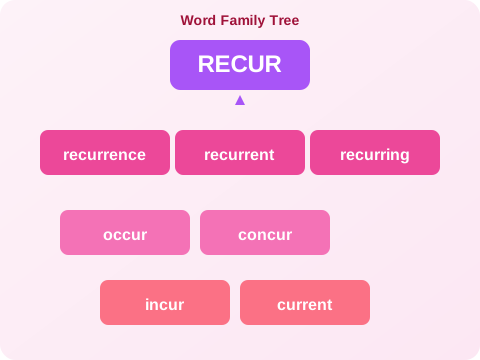
While researching, I found these related words that share similar patterns or roots. Understanding these connections has seriously improved my word game skills!
occur
RelatedTo happen or take place. One of those words I use constantly but never realized had the same root pattern.
My Insight: It's 5 letters too! Just swaps the 'R' for 'O' at the start. This pattern recognition is gold for word games.
concur
RelatedTo agree or be of the same opinion. A more formal way to say 'I agree' that sounds smarter.
My Insight: Another 5-letter word with the CUR ending! These three (recur, occur, concur) form a special trio in English.
incur
RelatedTo become subject to something unpleasant. Like when you incur a debt or incur someone's wrath.
My Insight: Yet another 5-letter CUR word! I've noticed these -CUR words are like siblings in the word family.
recure
RelatedAn archaic or rare variant of 'recur'. You won't see this in modern English much, but it exists!
My Insight: This is like 'recur's long-lost cousin. Technically valid but incredibly rare - I've only found it in old dictionaries.
The ECUR Word Family
I've mapped out the entire word family connected to the Latin root 'currere' (to run). Seeing these connections has helped me understand why RECUR is so special.
My ECUR Wordle Strategy
The ECUR Pattern is a Dead Giveaway
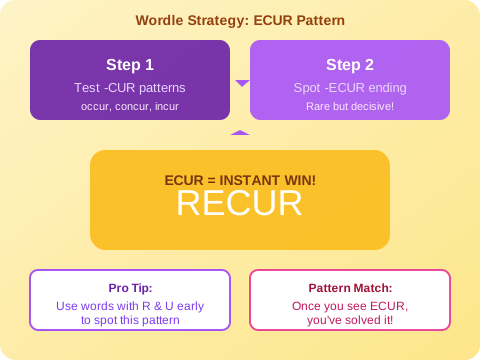
I've learned that if you've identified ECUR as the ending, you've essentially solved the puzzle. There's only ONE possibility - RECUR. This makes it both incredibly powerful and incredibly rare to encounter.
Look for Related Patterns First
What I recommend is testing for -OCUR, -CCUR, and -NCUR words before jumping to ECUR. Words like OCCUR, CONCUR, and INCUR are way more common. ECUR is like the final boss of this word family.
Use Words with R and U Early
I've found that playing words with both R and U in the right positions can help you spot this pattern quickly. Words like 'route', 'ruder', or 'outer' can test the waters without wasting guesses.
The Latin Root Strategy
Understanding that 'currere' (to run) is the Latin root helps. Any word related to running, happening, or occurring might be part of this family. ECUR words are all about things happening again or moving.
Frequently Asked Questions About ECUR Words
How many 5-letter words end in ECUR?
What does 'recur' mean and how is it used?
Why is ECUR such a rare ending?
Are there any other 5-letter words with similar patterns?
How useful is knowing ECUR for Wordle and word games?
What are some longer words that contain the ECUR pattern?
Why I Created This Deep Dive
When I first started exploring word endings for games like Wordle, I never expected to find something as rare as ECUR. The fact that there's exactly ONE 5-letter word with this ending blew my mind. I knew I had to create a comprehensive resource exploring not just 'recur' but the entire word family and linguistic context.
What I've discovered through this research is that understanding word patterns, roots, and families is way more valuable than just memorizing individual words. The Latin root 'currere' connects dozens of English words, and recognizing these patterns gives you a serious advantage in any word game.
While you might rarely encounter ECUR in actual gameplay, the skills you develop exploring rare patterns like this will help you spot common patterns faster and make smarter guesses. Plus, it's just fascinating to dive deep into linguistic curiosities!
If you enjoyed this exploration, you might also like my deep dives into words ending in CK, words ending in ASH, or words starting with CA. Happy word hunting!